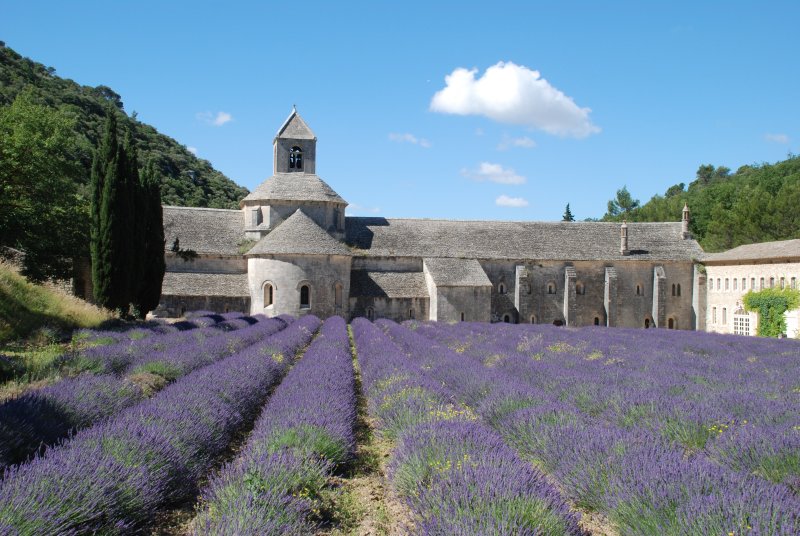
 EmDee, CC BY-SA
Abbeys to visit: tickets and what to see
The great transept of Cluny, the painted effigies of Fontevraud, the monks of Sénanque: the abbeys to visit in France, with the official ticket office of each one.
Places to visit
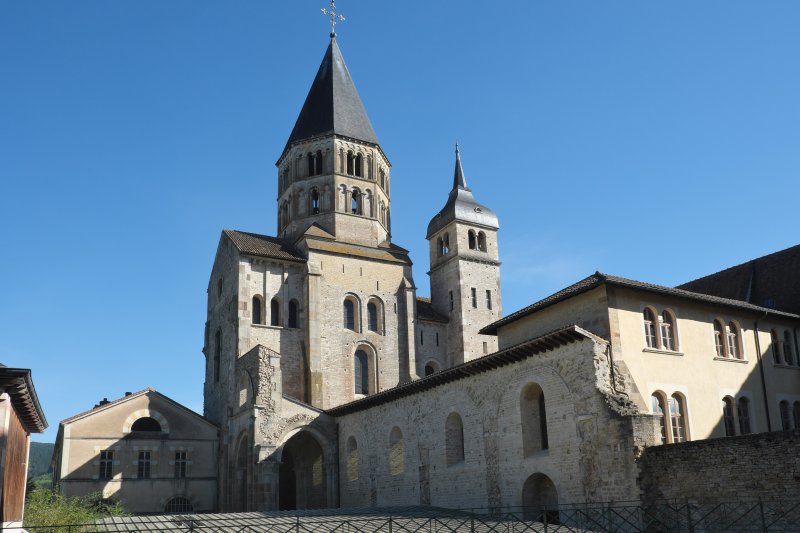 GFreihalter, CC BY-SA
Cluny Abbey
The great transept. Together with the Eau Bénite bell tower, it is all the 12th-century church keeps in elevation.Cluny, Francefrom €11
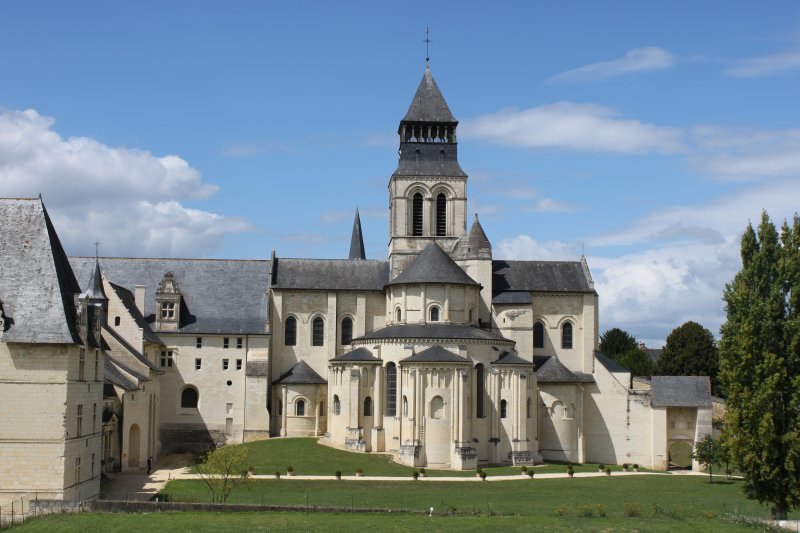 Matthias Holländer, CC0Timed entry
Royal Abbey of Fontevraud
The Plantagenet necropolis. Eleanor of Aquitaine made Fontevraud the burial place of the sovereigns of England. The official site says her effigy rests here today.Fontevraud-l’Abbaye, Francefrom €8EmDee, CC BY-SASénanque Abbey
The abbey church. A tau-cross plan whose liturgical east end faces north, squeezed by the narrow valley.Gordes, Francefrom €8Map
3 places on the mapOpen the full map
Three abbeys to visit, three stories
First of the abbeys to visit in France, Cluny Abbey was founded in 910, and in 1088 Abbot Hugues de Semur launched the Maior ecclesia, which remained the highest abbey church for almost 400 years, until St.
Read moreShow less
Peter’s in Rome overtook it. About 10% of its floor space survives: the great transept, nearly 30 meters high, the bell tower of the Eau Bénite, the Gothic chapel of Jean de Bourbon and the 13th-century Farinier. The Bernon ticket covers the abbey and the Cluny Museum of Art and Archaeology, and it is the only one sold online. The Royal Abbey of Fontevraud, founded in 1101, was chosen by Eleanor of Aquitaine as the necropolis of the sovereigns of England: Henry II, Richard the Lionheart and Eleanor herself are buried here, under painted effigies. From 1804 to 1963 the buildings served as a prison, and the site opened to the public in 1985. The abbey and the Museum of Modern Art, opened in 2021 with over 800 works, each have their own ticket, or a combined one, and the official page recommends three hours. Sénanque Abbey, founded in 1148 in a valley 1 kilometer long, is a working Cistercian monastery: a community of monks follows the Rule of Saint Benedict and gathers seven times a day in the church, with every service open to the public. The one-hour guided tour is in French only, and the abbey advises the HistoPad for visitors who do not speak French.
What sets these abbeys apart
- Who enters free. At Cluny, under-18s, 18 to 25-year-olds, a visitor with a disability and one companion, and everyone on the first Sunday of January, February, March, November and December, all on site only. At Fontevraud, under-18s and students under 25. At Sénanque, children under 6.
- Silence and dress. At Sénanque the monks stay in the enclosure during the tours and ask for an atmosphere of silence. Access to the lavender fields is forbidden, to protect the harvest.
- Stairs. The medieval buildings of Sénanque are impossible in a wheelchair. At Fontevraud, the museum is accessible and the abbey only partly.
- Closing days. Fontevraud closes on Tuesdays in some periods, on 25 December and 1 January, and stops entries one hour before closing. At Cluny, the museum splits its day into a morning and an afternoon session.
Before you set off
Cluny is reached from the Mâcon-Ville and Mâcon-Loché stations, and the self-guided visit of the abbey, the museum and the gardens takes about an hour and a half.
Fontevraud is about 15 minutes by car from Saumur, and visitors who arrive by bike, bus, train or carpool pay a partner rate at the desk. Sénanque is a 30-minute hike from the village of Gordes, with a free public car park 5 minutes on foot from the entrance, and groups book by email rather than with individual tickets.